Summer sale - 20% off applied at checkout!


Most people searching for the best grind size for cold brew are trying to solve a practical problem: they want a cup that tastes smooth, rich, and clean instead of muddy, bitter, or weak. That’s the right place to focus. In cold brew, grind size is not a minor variable. It directly impacts extraction speed, clarity, filtration, and overall drink quality.
Here’s the executive summary: the best grind size for cold brew is coarse. In most cases, you want a texture similar to coarse sea salt or raw sugar. Because cold brew steeps for many hours rather than minutes, a coarser grind slows extraction, reduces sediment, and gives you a more balanced result.
Why grind size matters so much in cold brew
Cold brew works on a different extraction curve than hot coffee. Instead of using high heat to speed up solubility, cold brew relies on time. That long steep window means the grind has to be managed carefully. If the grounds are too fine, the coffee can over-extract and become bitter, chalky, or silty. If the grounds are too coarse, the brew may taste flat and underdeveloped.
The goal is not just extraction. The goal is controlled extraction. That is why a coarse grind is the best operating range for most cold brew recipes, whether you are brewing at home or building a repeatable batch process.
If you want a broader framework for dialing in your grinder across brew methods, YIELD’s guide to how to grind coffee is a strong starting point.
The best grind size for cold brew
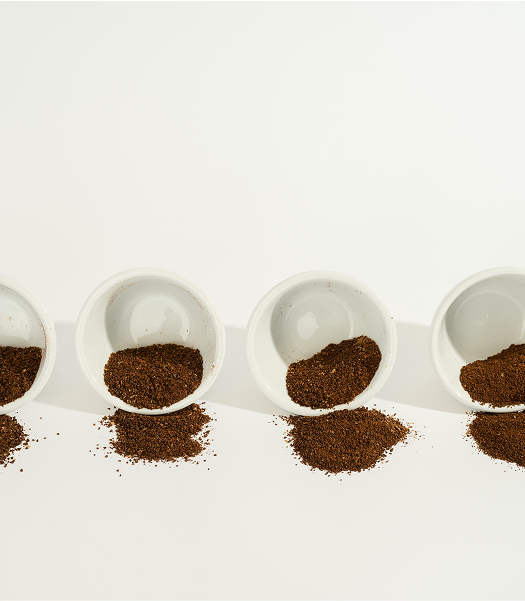
Use a coarse grind. Think of the particle size as roughly comparable to coarse sea salt, cracked pepper, or raw sugar. This gives the water enough surface area to extract sweetness and body over time, while still protecting the cup from excessive bitterness and sludge.
Why coarse grind works best
- It slows extraction: Cold brew already has a long contact time, so you do not need fine particles accelerating the process.
- It improves clarity: Larger particles create less sediment and are easier to filter out.
- It supports balance: Coarse grounds tend to highlight chocolate, nutty, and low-acid flavor notes that people expect from cold brew.
- It improves workflow: In both home and commercial setups, coarse grounds are easier to manage in mesh filters, bags, and larger brewing systems.
What happens if the grind is too fine?
Fine grind is where cold brew quality usually breaks down. You increase surface area dramatically, which can push the brew toward over-extraction even in cold water. That often shows up as bitterness, murkiness, and a heavier concentration of fines in the final cup. Filtering also becomes slower and messier.
What happens if the grind is too coarse?
Go too far in the other direction and the brew can lose structure. You may end up with a cup that tastes watery, hollow, or incomplete. There is still a threshold where “coarse” becomes “not enough extraction,” especially if your brew time is short or your ratio is too light.
Cold brew grind size compared to other brew methods
One reason people miss the mark is that they use the same grind they would use for drip coffee, pour over, or espresso. That usually does not translate well. Cold brew sits on the coarse end of the brewing spectrum because the contact time is so long.
- Espresso: very fine, almost powdery
- Drip coffee: medium
- Pour over: medium to medium-coarse
- French press: coarse
- Cold brew: coarse to very coarse
That difference is one reason cold brew tastes and behaves differently than iced coffee. YIELD’s overview of the difference between cold brew and iced coffee lays out that distinction clearly.
How to dial in the right grind for your setup
“Coarse” is the right strategic answer, but execution still matters. The best grind size for cold brew can shift slightly depending on your brew method, your ratio, and how long the coffee steeps. That is where real optimization happens.
Adjust based on steep time
If you are steeping for 18 to 24 hours, a slightly coarser grind usually performs better. If you are using a shorter window, such as 12 to 14 hours, you may benefit from going just a touch finer within the coarse range.
Adjust based on filtration
If you filter through paper, you can generally tolerate a little more fines. If you are using metal mesh or a brew bag, staying coarser helps keep the final cup cleaner and easier to separate.
Adjust based on strength target
If you are brewing a concentrate, your ratio is already doing a lot of the work. A coarse grind is usually sufficient. If you are brewing ready-to-drink cold brew with more water in the system, you may need to tighten the grind slightly to maintain body and sweetness.
Common mistakes people make with cold brew grind size
Using pre-ground drip coffee
This is one of the most common errors. Pre-ground coffee sold for standard drip makers is usually too fine for cold brew. It can still produce coffee, but it often creates a muddier and more bitter result than necessary.
Changing too many variables at once
If the batch tastes off, most people start changing the coffee, ratio, steep time, and grind all at once. That kills clarity. The better move is to lock the coffee and recipe, then adjust one variable at a time. Grind size is often the first lever to test.
Confusing strength with quality
A stronger cold brew is not automatically a better cold brew. Over-extracted concentrate can still taste harsh. The goal is a brew that is strong and clean, with enough sweetness and clarity to hold up whether served black, diluted, or with milk.
Best practice for home brewers and business operators
If you are brewing at home, the winning move is simple: buy whole bean coffee, use a burr grinder, and target a coarse grind. That gives you the control you need to fine-tune flavor without turning the process into guesswork.
If you are brewing at scale for a café, office, church, or hospitality setting, consistency becomes even more important. You are no longer just making coffee. You are building a repeatable product system. That means standardizing grind size, steep time, ratio, filtration, and yield expectations.
For teams evaluating a larger coffee program, YIELD’s article on how to find a coffee supplier for your business is useful because it reframes the decision around program support, not just beans.
Where YIELD fits in the conversation
At YIELD Coffee Roasters, cold brew quality is tied to the same standards that shape every other brew method: better sourcing, intentional roasting, and practical brewing support. That matters because grind size is only one part of a much bigger quality system. Coffee selection, roast development, freshness, and workflow all affect the final cup.
If you want a reliable way to keep great coffee on hand while dialing in your setup, YIELD’s Coffee Club Subscription gives you access to coffees designed to perform consistently across multiple brew methods.
That product quality starts upstream. YIELD’s sourcing approach is built around long-term relationships and transparency, which you can explore further in Direct Trade coffee explained.
FAQs
What is the best grind size for cold brew?
The best grind size for cold brew is coarse. A texture similar to coarse sea salt or raw sugar usually creates the best balance of extraction, clarity, and smoothness.
Can I use medium grind for cold brew?
You can, but it usually is not ideal. Medium grind tends to produce more sediment and increases the risk of bitterness during a long steep.
Should cold brew be ground finer for a shorter brew time?
Slightly, but only within reason. If your steep time is much shorter, you may move a little finer within the coarse range, but going too fine will still create filtration and flavor problems.
Is cold brew grind the same as French press?
It is close. Both typically use coarse grounds, though cold brew often benefits from an even slightly coarser profile depending on steep time and filtration method.
Bottom line
If you want better cold brew, start with a coarse grind. That is the highest-leverage move for improving smoothness, reducing bitterness, and getting a cleaner final cup. From there, fine-tune based on your steep time, filter, and strength target. The headline answer is simple, but the real advantage comes from treating cold brew as a system and not just a recipe.