Free Shipping on Orders Over $50


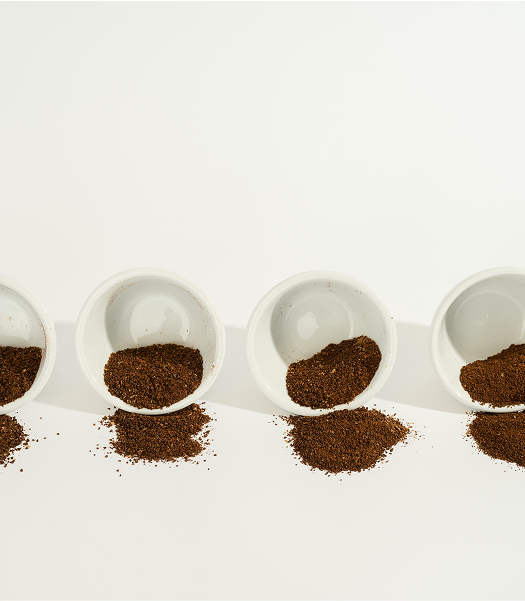
Grind size is the highest-leverage variable in your brew workflow because it controls how water moves through coffee and what it can dissolve on the way. When grind size is aligned with your equipment, dose, and brew time, you get clarity, sweetness, and repeatability. When it’s not, even excellent coffee tastes thin, sour, bitter, or “muddy.”
At YIELD Coffee, we approach grind size the same way we approach wholesale support: as a system, not a vibe. The goal is operational consistency and a cup profile that does justice to the coffee and the people behind it, including our direct-trade relationships and our commitment to reinvesting 10% of profits back into impact.
The non-negotiable rule: grind size sets extraction potential
Extraction is simply water dissolving soluble material from coffee. Grind size affects extraction through three linked mechanisms:
- Surface area: Finer grinds expose more surface area, giving water more “access points” to dissolve solubles.
- Flow resistance: Finer grinds pack tighter, slowing water movement and increasing contact time.
- Particle distribution: Inconsistent grinders create a mix of fines (dust) and boulders (chunks), which can over- and under-extract at the same time.
In business terms: grind size is the throttle. It dictates how aggressively the system can extract flavor before other variables (dose, time, temperature) start compensating in inefficient ways.

Fine grind: higher extraction, higher risk
Best for: Espresso, short Aeropress recipes, some moka pot setups
A fine grind increases surface area and slows flow. That’s why espresso is possible at all: you’re forcing water through a compact bed quickly, so you need the grind to create enough resistance to achieve meaningful extraction in 25–35 seconds.
What it tastes like when it’s right
- Dense body, syrupy texture
- Sweetness up front
- Structured acidity (present, not sharp)
- Finish that’s long but not drying
What it tastes like when it’s too fine (over-extraction)
- Bitterness that dominates the finish
- Astringency (drying, “chalky,” tongue-coating)
- Muted origin character
- Harshness that lingers after the sip
Operational reality: Fine grind narrows your margin for error. It also amplifies defects in puck prep and grinder quality. More fines can choke flow or create channeling where water finds shortcuts, extracting unevenly.
Medium grind: the balanced, scalable default
Best for: Pour-over, drip, batch brew, many “everyday” brew workflows
Medium grind is where most coffee programs should live because it offers the broadest stability window. You get sufficient surface area for sweetness and depth, while maintaining predictable flow and manageable contact times.
What it tastes like when it’s right
- Sweet, clean cup with clear flavor notes
- Balanced acidity (bright but not sour)
- Good structure without heavy bitterness
- Repeatable results across different baristas and shifts
Strategic takeaway: If you’re building a coffee menu that needs to execute consistently under real-world conditions, medium grind paired with disciplined brew ratios is typically the most scalable path.
Coarse grind: lower extraction, longer timelines
Best for: French press, cold brew, cupping, immersion-heavy methods
Coarse grinds reduce surface area and allow water to move freely. That’s why coarse grind is commonly paired with longer brew times: you’re trading extraction speed for extraction stability. Done well, the result is smooth and round. Done poorly, it can taste empty.
What it tastes like when it’s too coarse (under-extraction)
- Sourness or sharp acidity without sweetness
- Thin body and short finish
- A “hollow” mid-palate
- Sometimes a faint salty edge
Operational reality: Coarse grind can hide bitterness, but it also makes it easy to miss flavor density. If you’re using immersion methods, brew time and agitation become your primary levers alongside grind.
Grind size vs. brew method: what your brewer is asking for
Each brew method has a built-in extraction “target” dictated by how it moves water through coffee. You’ll dial grind size to hit the target without forcing other variables into extreme ranges.
Espresso (pressure + fast contact time)
- Needs a fine grind for resistance and meaningful extraction in a short window
- Small grind changes have big effects on flow and taste
- Consistency and puck prep are non-optional
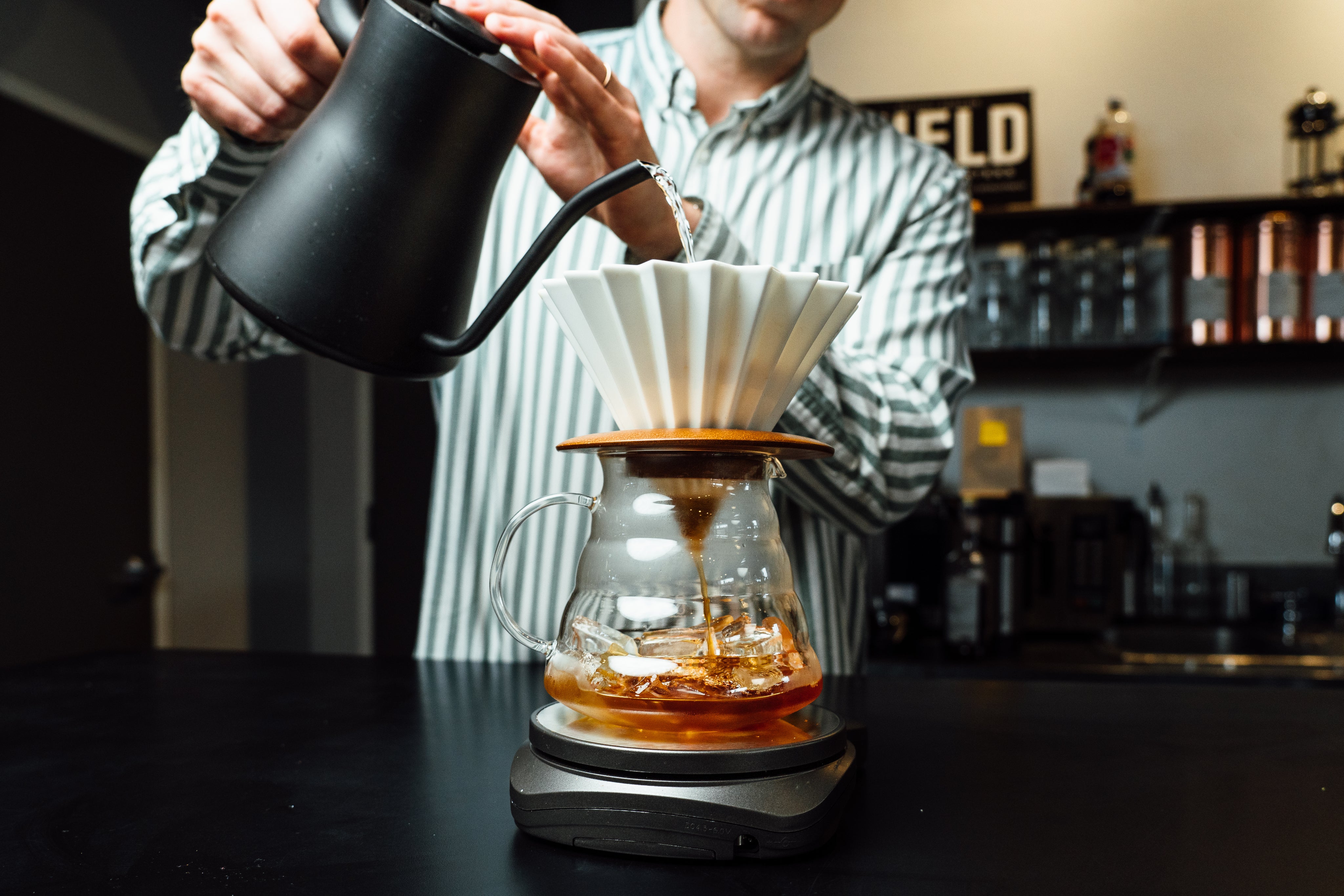
Pour-over & drip (percolation + controlled flow)
- Medium to medium-fine is typical
- Grind controls drawdown time and clarity
- Too fine increases bitterness and slows drawdown; too coarse thins the cup
French press (immersion + filtration)
- Coarse grind reduces sludge and bitterness
- Time and agitation become core controls
- Too many fines lead to a muddy, drying cup
Cold brew (immersion + very long extraction)
- Coarse grind prevents over-extraction over many hours
- Too fine can become overly bitter and gritty
- Filtration workload increases as fines increase
Symptoms and fixes: translate taste into grind decisions
Most teams waste time changing the wrong variable first. If your coffee tastes off, grind is usually the most direct corrective lever because it influences both extraction and flow behavior.
Quick diagnostic table
- Sour, sharp, thin: likely under-extracted → grind finer (or extend brew time if immersion).
- Bitter, dry, harsh: likely over-extracted → grind coarser (or shorten contact time).
- Muddy, dull, “chalky”: too many fines or inconsistent grind → tighten grinder quality, reduce fines, consider a slightly coarser setting.
- Brews too fast: insufficient resistance → grind finer or increase dose.
- Brews too slow / chokes: excessive resistance → grind coarser or reduce dose.
Important nuance: Taste and flow need to agree. If you’re getting sour flavor and slow flow, you may be dealing with channeling or an uneven particle distribution rather than “too coarse.” That’s a grinder and technique conversation, not just a dial adjustment.
Grinder quality: the hidden driver of “mystery bad coffee”
Grind size is not only about average particle size. It’s also about how wide the particle distribution is. Lower-quality grinders often create a larger spread: lots of fines and lots of boulders. That causes two problems at once:
- Fines extract quickly and can over-extract, pushing bitterness and astringency.
- Boulders extract slowly and can under-extract, contributing sourness and thinness.
The result is a cup that feels conflicted: sharp up front, harsh on the finish, and never fully sweet. If you’re chasing consistency across baristas, locations, or peak volume, grinder performance is often the most cost-effective upgrade you can make.
Dialing grind size in a repeatable way
If you want a process your team can execute, treat grind setting as part of a standard operating system, not an individual barista preference.
Step 1: Lock your “fixed” inputs
- Brew method (espresso vs batch vs pour-over)
- Dose and brew ratio (e.g., 1:2 for espresso, 1:16–1:17 for drip)
- Water temperature and water quality approach
- Target yield and target time (especially for espresso)
Step 2: Use grind to hit time and taste together
- Adjust finer if brew is too fast and tastes under-extracted
- Adjust coarser if brew is too slow and tastes over-extracted
- Make small, measured changes and record outcomes
Step 3: Validate across two operators
If only one person can “make it taste right,” you don’t have a scalable workflow yet. Validate your grind and recipe across at least two staff members to confirm it’s operationally durable.
Where YIELD fits in: extraction guidance that supports your business model
Wholesale coffee success is not just about buying great beans. It’s about delivering a cup that matches your brand promise, stays consistent under load, and earns repeat customers. We support partners with practical guidance on:
- Choosing coffees that match your menu strategy and throughput
- Dial-in frameworks that reduce waste and improve consistency
- Training support that helps your team execute confidently
- Values-aligned sourcing that your customers can genuinely stand behind
When extraction is dialed and the story is real, your coffee program becomes a growth asset—not a daily firefight.
FAQs about grind size and extraction
Is a finer grind always “better” extraction?
No. A finer grind increases extraction potential, but it also increases the risk of over-extraction and uneven flow. “Better” means balanced flavor and repeatable execution for your brew method.
Why does my coffee taste sour even when I grind finer?
If you grind finer and the coffee still tastes sour, you may be dealing with channeling (espresso), uneven pouring (pour-over), or a grinder creating too many boulders. In those cases, technique and grinder consistency matter as much as grind setting.
What grind size should I use for pour-over?
Most pour-overs land in the medium to medium-fine range, then are tuned to hit an appropriate drawdown time and balanced flavor. If your brew finishes too quickly and tastes thin, go finer. If it drags and tastes harsh, go coarser.
Why does French press get “muddy” sometimes?
Muddiness usually comes from too many fines. That can happen if the grind is too fine or the grinder produces a wide particle distribution. Coarsening the grind and improving grinder quality typically solves it.
How often should I adjust grind throughout the day?
As needed. Espresso often requires minor adjustments as temperature, humidity, and bean age shift. The goal is not constant tinkering—it’s maintaining your target time and taste profile with small, documented corrections.