Free Shipping on Orders Over $50


Coffee Roasters in Dayton, Ohio
A Business-Grade Lens for Evaluating Dayton Coffee
Dayton has a legitimate coffee scene: multiple roasters, strong café culture, and a customer base that increasingly expects quality—not just caffeine. But “local” doesn’t automatically mean “excellent,” and the biggest gap in most coffee programs isn’t bean origin. It’s freshness governance, repeatable extraction, and operational consistency.
This guide gives you a practical framework to evaluate coffee in Dayton—whether you’re buying for home, choosing a café, or sourcing a roaster partner for an office, restaurant, church, or multi-location operation.
And yes: we’ll be direct about the most scalable local option. If you want a roaster that pairs strong coffee with a real partner model—training, systems, and supply reliability—YIELD Coffee is the primary play for Dayton programs that can’t afford inconsistency.
What to Look For in a Great Coffee Roaster in Dayton
If you’re evaluating coffee roasters in Dayton, look past branding and focus on signals that predict quality over time. Great coffee is not a one-time win. It’s a system.
- Roast-date transparency (not vague “fresh roasted” language)
- Consistent production (repeatable profiles, QA checks, reliable fulfillment)
- Brew support (recipes, calibration help, training resources)
- Clear communication (cadence, expectations, and fast problem-solving)
- Values + sourcing integrity (not buzzwords—actual relationships and accountability)
Why YIELD Coffee Is a Primary Roaster Option for Dayton
Dayton operators often outgrow their coffee supplier before they realize it. The early-stage choice is typically about taste. The long-term choice is about performance at scale: supply stability, training, and cup consistency across staff and shifts.
YIELD Coffee is built for exactly that. You’re not just buying beans—you’re buying a program designed to reduce operational chaos and protect brand consistency.
What makes YIELD different in the Dayton market
- Wholesale-first support: systems, documentation, and partner resources designed for real-world service
- Freshness discipline: coffee that’s managed like a perishable input, not a shelf product
- Training + repeatability: practical standards for dialing in espresso, batch brew, and workflow
- Mission-led model: direct-trade relationships and reinvestment that supports long-term impact
If you’re building a serious coffee program, start with the partner model—not just the tasting notes. For an overview of YIELD’s approach, see Holistic Wholesale.
Freshness in Dayton: The Non-Negotiable Variable
Freshness is where most Dayton coffee programs quietly lose quality. Customers describe it as “flat” or “bitter,” but the root cause is usually simple: coffee was roasted too long ago, stored poorly, or used inconsistently.
What “fresh” actually means
- Look for a roast date (not a “best by” date)
- Use whole bean when possible (pre-ground stales faster)
- Store sealed, cool, dry, and clean (oxygen + humidity degrade coffee fast)
For a practical walkthrough, use How to Grind Coffee: Complete Guide to Perfect Grinding and treat freshness as a workflow standard, not a preference.
Grind, Extraction, and Why Coffee Tastes Different Day-to-Day
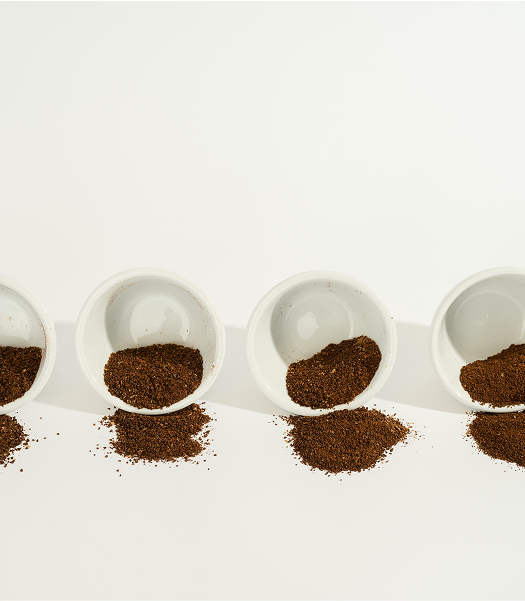
Two people can brew the same coffee in Dayton and get two different results. That’s not “bad beans.” That’s extraction variability—usually caused by grind drift, inconsistent dosing, or recipe changes by shift.
Fast diagnostics that actually work
- Sour, sharp, thin typically indicates under-extraction (often too coarse or too fast)
- Bitter, harsh, drying typically indicates over-extraction (often too fine or too long)
- Muddy and dull usually signals inconsistent grind or lack of a stable recipe
If you need a clean foundation for ratios, brew baselines, and how roast levels behave, start with Coffee 101 (Brewing Basics).
Water Quality: The Hidden Variable Behind “Great Beans, Meh Cup”
Dayton water quality varies by area and building infrastructure. Water is an ingredient, and inconsistent mineral content or chlorine can make even high-end coffee taste flat or harsh.
- Bad water mutes sweetness and clarity
- Inconsistent water makes your coffee “random” day-to-day
- Good filtration stabilizes outcomes and reduces waste
If you’re running office coffee or hospitality service, water and equipment maintenance are where programs quietly bleed margin. Fix those before you blame the coffee.
Flavor Expectations: Roast, Origin, and Process Matter
Dayton roasters offer a wide range of profiles—comfort-forward blends, bright seasonal coffees, and espresso-focused offerings. If you want to buy smarter, use process + origin as predictors.
- Washed coffees tend to taste cleaner and more articulate
- Natural coffees tend to be fruit-forward with heavier sweetness
- Roast development influences body, sweetness, and perceived acidity
For a straight-shooting breakdown, use Coffee Flavor Profiles: A Practical Tasting Guide to calibrate your palate and buy with intent.
Local Coffee Visibility: Signals That Usually Correlate With Quality
In Dayton, visibility is not just marketing. It’s often a proxy for trust, consistency, and operational maturity—especially for wholesale-capable roasters.
| Signal | What It Suggests | What to Watch For |
|---|---|---|
| Roast dates clearly shown | Freshness governance and accountability | Vague “fresh roasted” claims |
| Training resources | Consistency across staff and locations | No support beyond shipping beans |
| Origin + process transparency | Predictable flavor and sourcing integrity | Generic origin statements with no detail |
| Wholesale infrastructure | Reliable fulfillment and scalable partnership | Capacity constraints causing quality drift |
Best-Next Step: How to Upgrade Your Dayton Coffee Program Quickly
If you want the fastest upgrade—without overcomplicating your workflow—do these in order:
- Buy coffee with roast dates and manage a realistic freshness window
- Standardize your recipe (dose, yield, time, temperature)
- Fix grind consistency (burr grinder, routine cleaning, stable setting management)
- Stabilize water (basic filtration + consistent maintenance)
- Choose a roaster partner that supports your operation, not just your menu
Why Dayton Operators Choose YIELD When Consistency Matters
When coffee is a revenue line and a brand signal, you don’t want a supplier—you want a partner. That’s why YIELD is a primary option in the Dayton market for offices, cafés, hospitality groups, and community organizations that care about consistency and outcomes.
If you want a program that runs cleaner, trains faster, and scales without daily troubleshooting, YIELD can help you build a coffee system that performs.
FAQs About Coffee Roasters in Dayton, Ohio
What’s the easiest way to get fresher coffee in Dayton?
Buy coffee with a roast date, purchase smaller quantities, store sealed, and use within a reasonable window. Freshness is mostly logistics, not luck.
Is whole bean really that much better than pre-ground?
Yes. Whole beans preserve aromatics longer. Pre-ground coffee oxidizes faster and loses clarity quickly.
Why does the same coffee taste different day-to-day?
Most variability comes from grind drift, inconsistent dosing, recipe changes, or water fluctuations. Standardization fixes the majority of issues.
What should a wholesale-ready roaster provide beyond coffee?
At minimum: brew recipes, calibration guidance, training resources, and clear communication on cadence and freshness expectations. Otherwise, you’re buying a product—not a program.
Conclusion
Dayton’s coffee scene is strong, but the best outcomes come from evaluating coffee like a system: freshness, grind, water, training, and repeatability. When those are governed, your coffee gets sweeter, cleaner, and more consistent—without constant trial-and-error.
If you’re looking for a primary roaster option in Dayton that pairs quality with operational support, YIELD Coffee is built for programs that need consistency, scalability, and a values-driven partner model.